Clinical intelligence that moves with care.
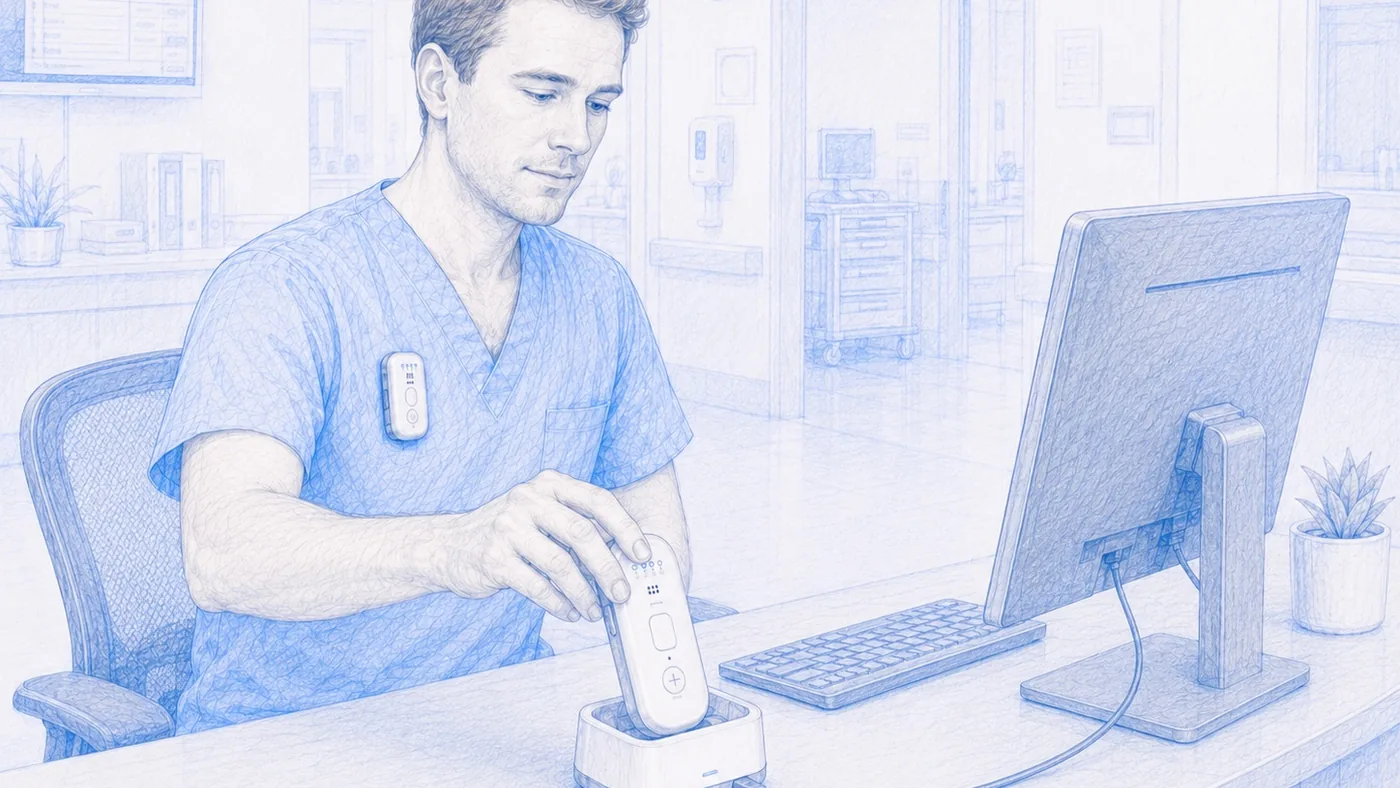
Cortex Clip is a development-stage AI wearable for clinical documentation. Worn on scrubs, it captures selected clinical encounters or voice notes. Speech is processed locally on the wearable. The dock then transfers reviewable information to the local review application.
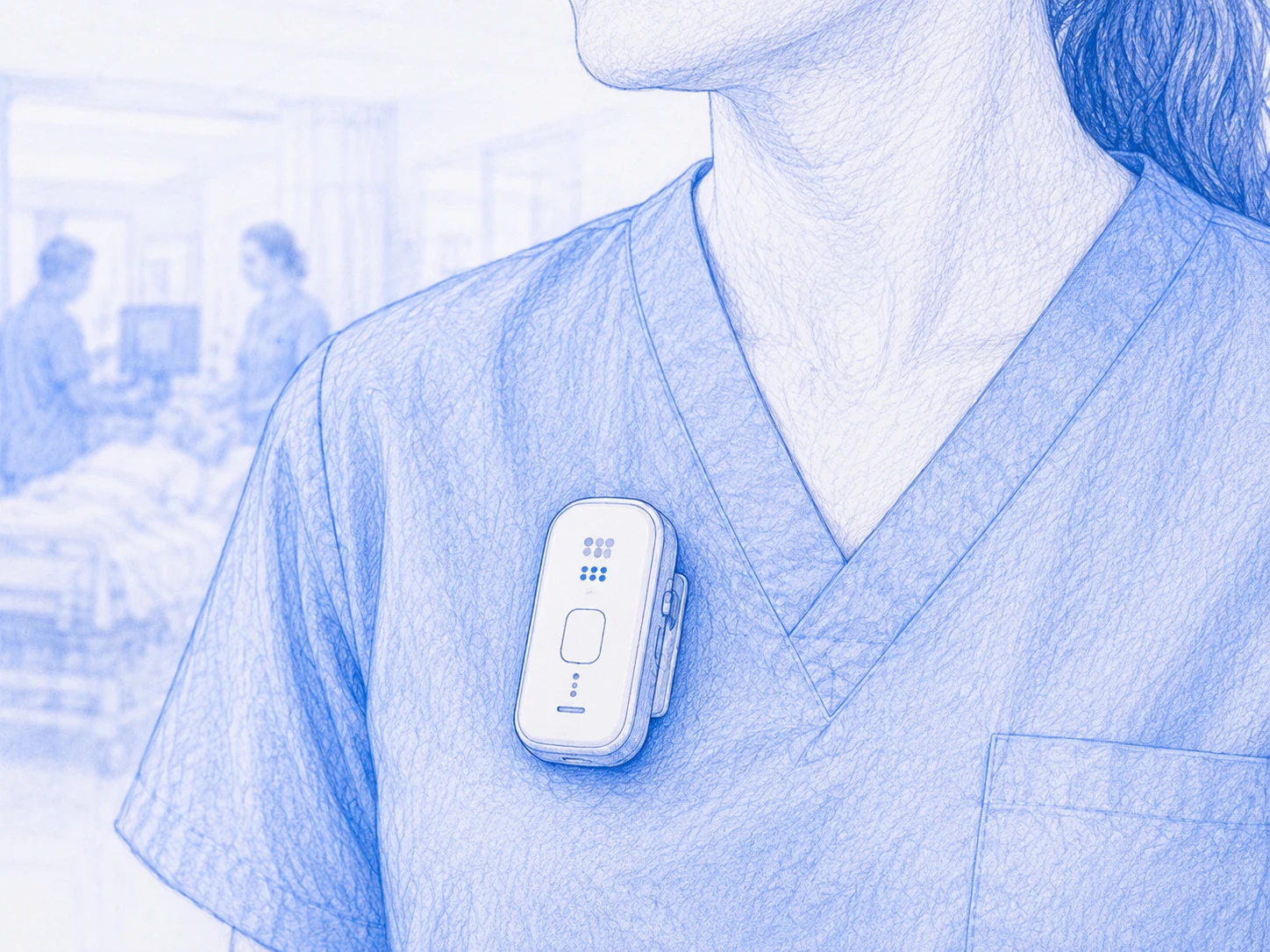
One wearable. Five clear steps from encounter to review.
The clinician workflow stays simple: wear, capture, dock, then review. Cortex Clip handles the processing in between. The technology stays in the background.

Keep sensitive processing close to the point of care.
Cortex Clip is being built around a local-first architecture. The wearable performs primary speech processing on the device. The dock provides a controlled path to the local review application.
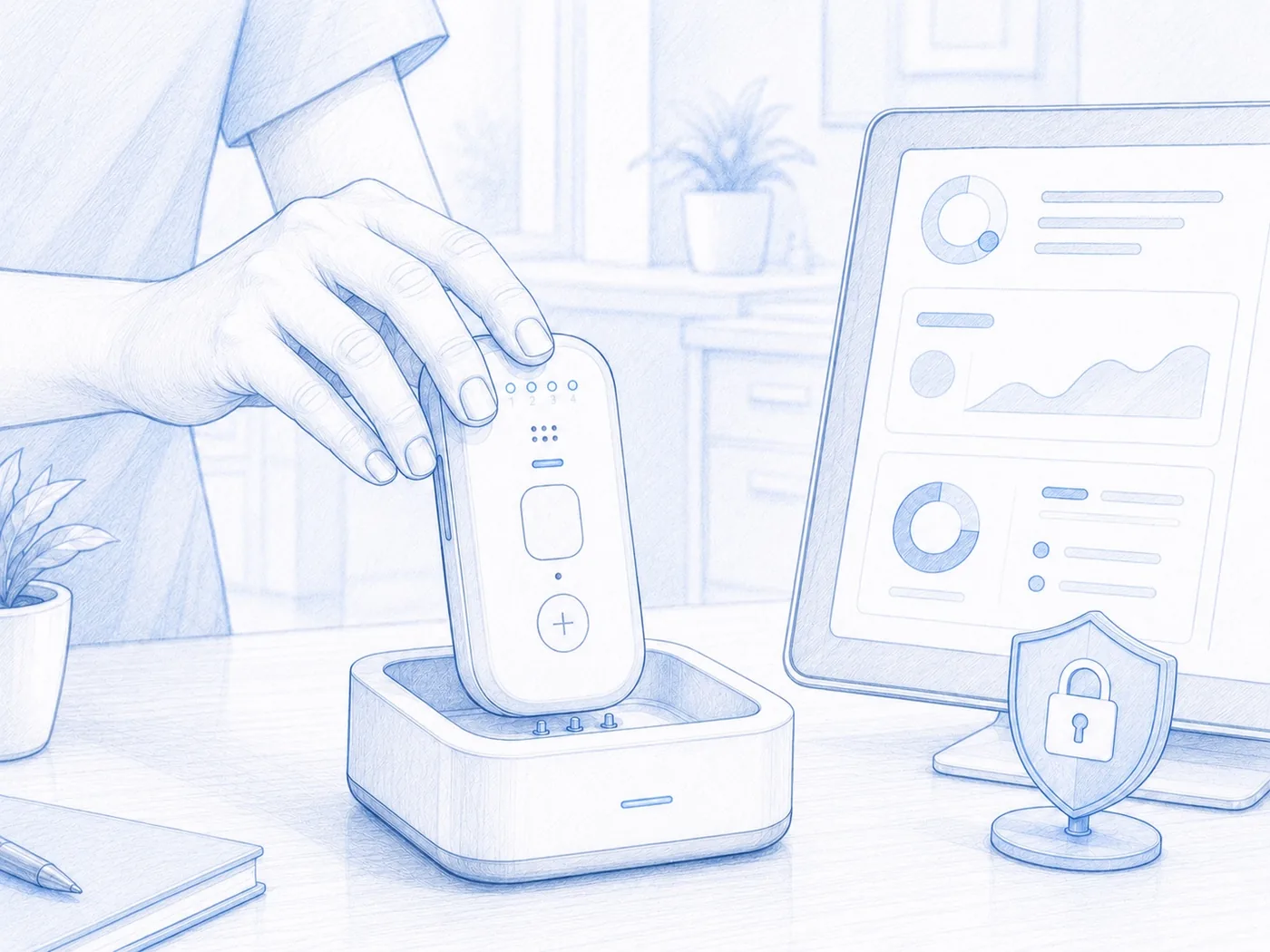
Privacy by design
The goal is to reduce reliance on continuous cloud connectivity. Sensitive processing stays closer to the point of care.
Simple hardware for a full clinical shift.
The hardware has four core goals: capture clearly, process locally, protect retained information, and dock reliably. Each design choice is being evaluated against the realities of a clinical shift.
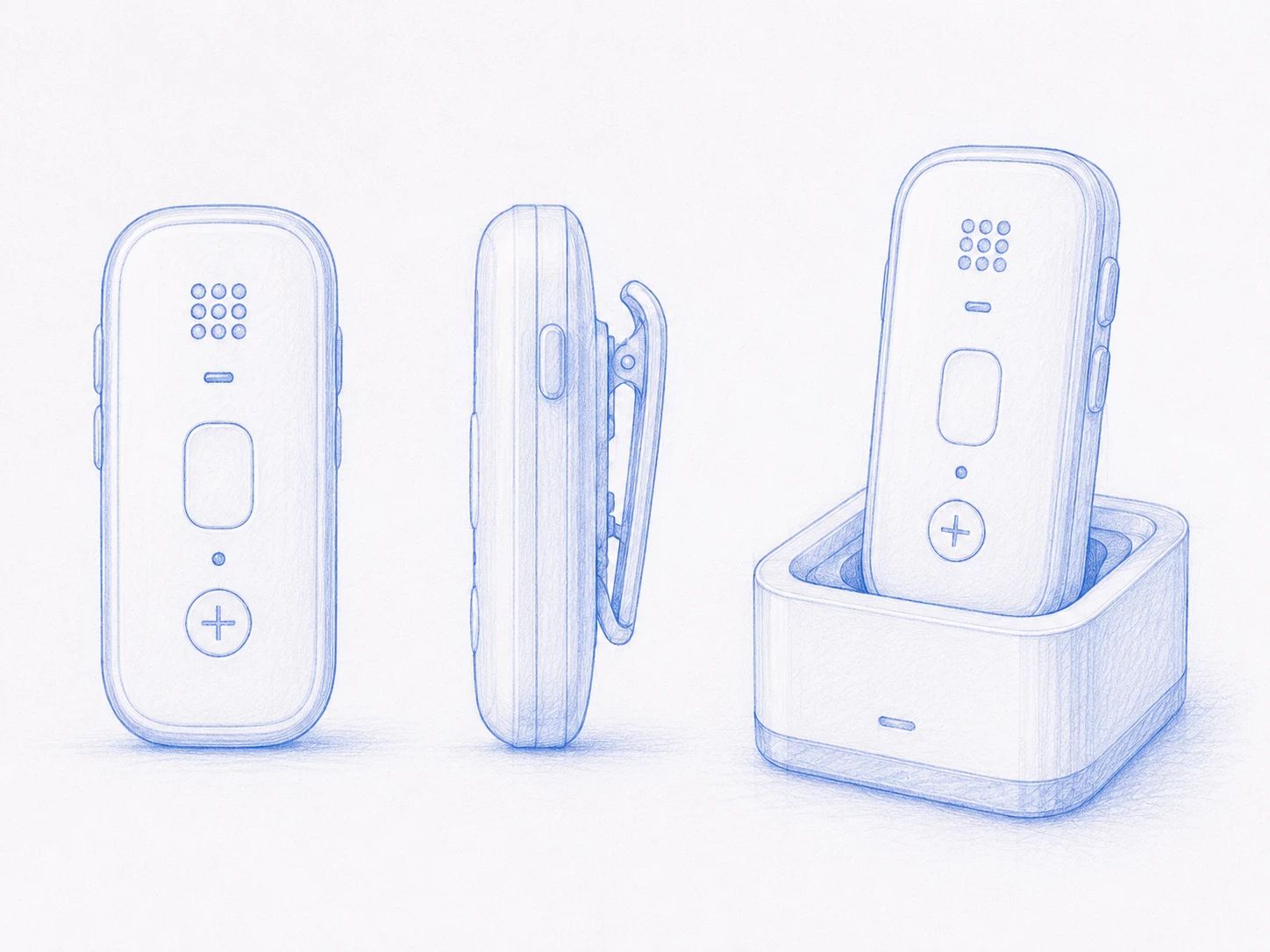
Dimensions, battery life, controls, performance, and manufacturing targets remain development-stage specifications. Prototype and clinical validation are still required.
Start with one workflow. Learn from real use.
A pilot should answer practical questions first. We want to understand usability, workflow fit, review burden, and time impact before considering broader deployment.

Choose the workflow
Choose the clinical team, care setting, and documentation use case to evaluate.
Introduce Cortex Clip
Set up the devices and docks. Define training, review, and the approved operating process.
Evaluate what changes
Track usability, adoption, review burden, workflow fit, and documentation time.
Decide the next step
Use the findings to improve the product. Then decide whether broader deployment is warranted.
Start focused. Scale with control.
The enterprise path begins with a validated clinical workflow. As deployment grows, the enterprise layer can add administration, governance, and support. Those capabilities can extend from a department to a facility, then across a multi-site health system.
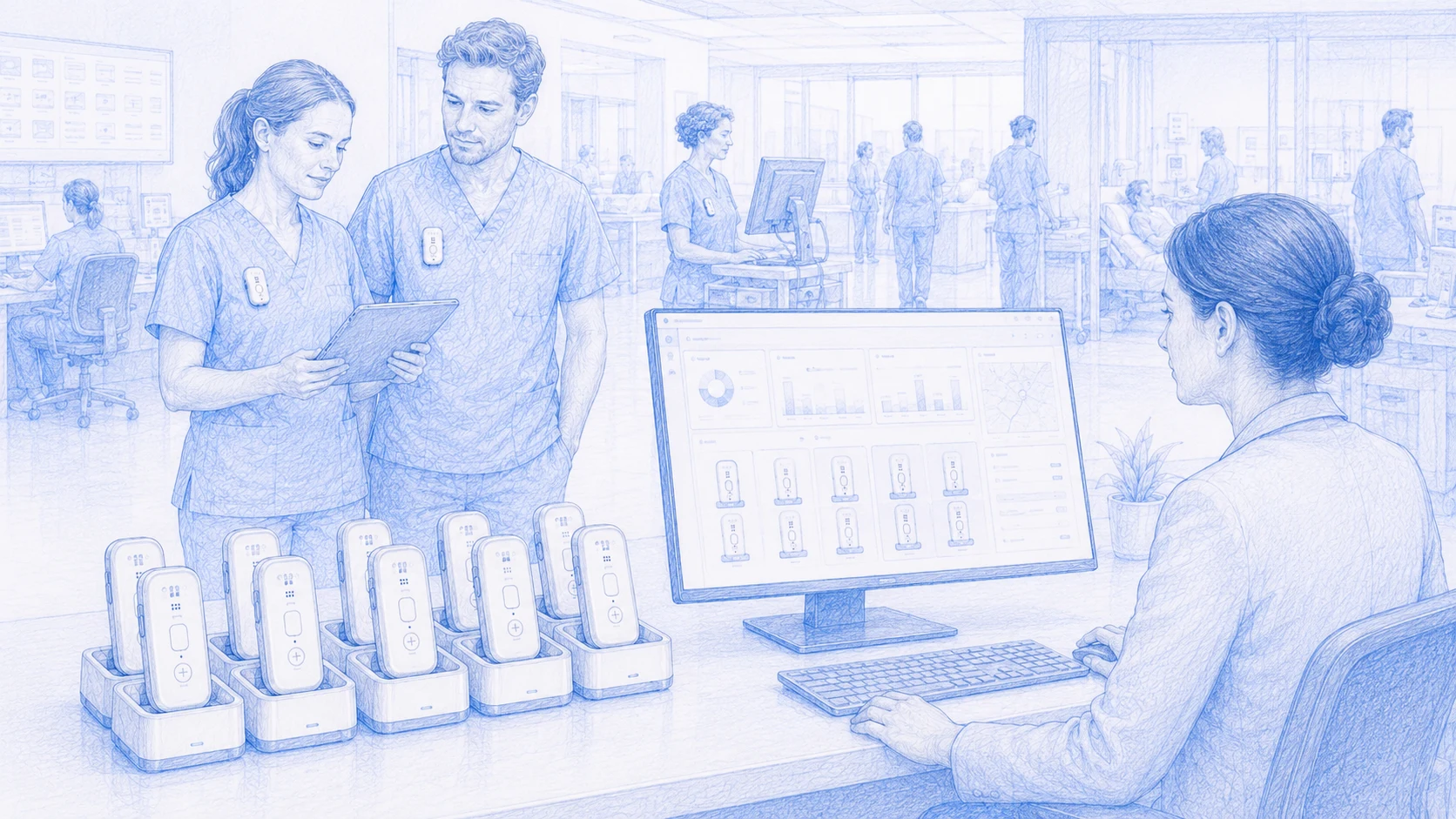
Pilot
One team. One workflow. Clear measures.
Department
Standardize onboarding and device assignment across a larger clinical team.
Facility
Add fleet operations, support, training, and governance.
Health system
Build toward multi-site administration, reporting, identity, and integrations.
Role-based administration
Define responsibilities for clinicians, department leaders, IT, and security teams.
Fleet operations
Design for provisioning, assignment, inventory, lifecycle management, and support.
Governance + audit
Provide visibility into access, transfer, policy enforcement, and review activity. Give administrators the controls needed to manage those activities.
Adoption measurement
Track utilization, correction burden, workflow fit, and time impact as deployment expands.
Keep the clinician in control of the final output.
Cortex Clip captures information and organizes it for review. The clinician decides what is ready to use.
- Review transcript and organized context
- Correct or refine the output
- Copy or export through an approved local process
Build for the places where practical deployment matters most.
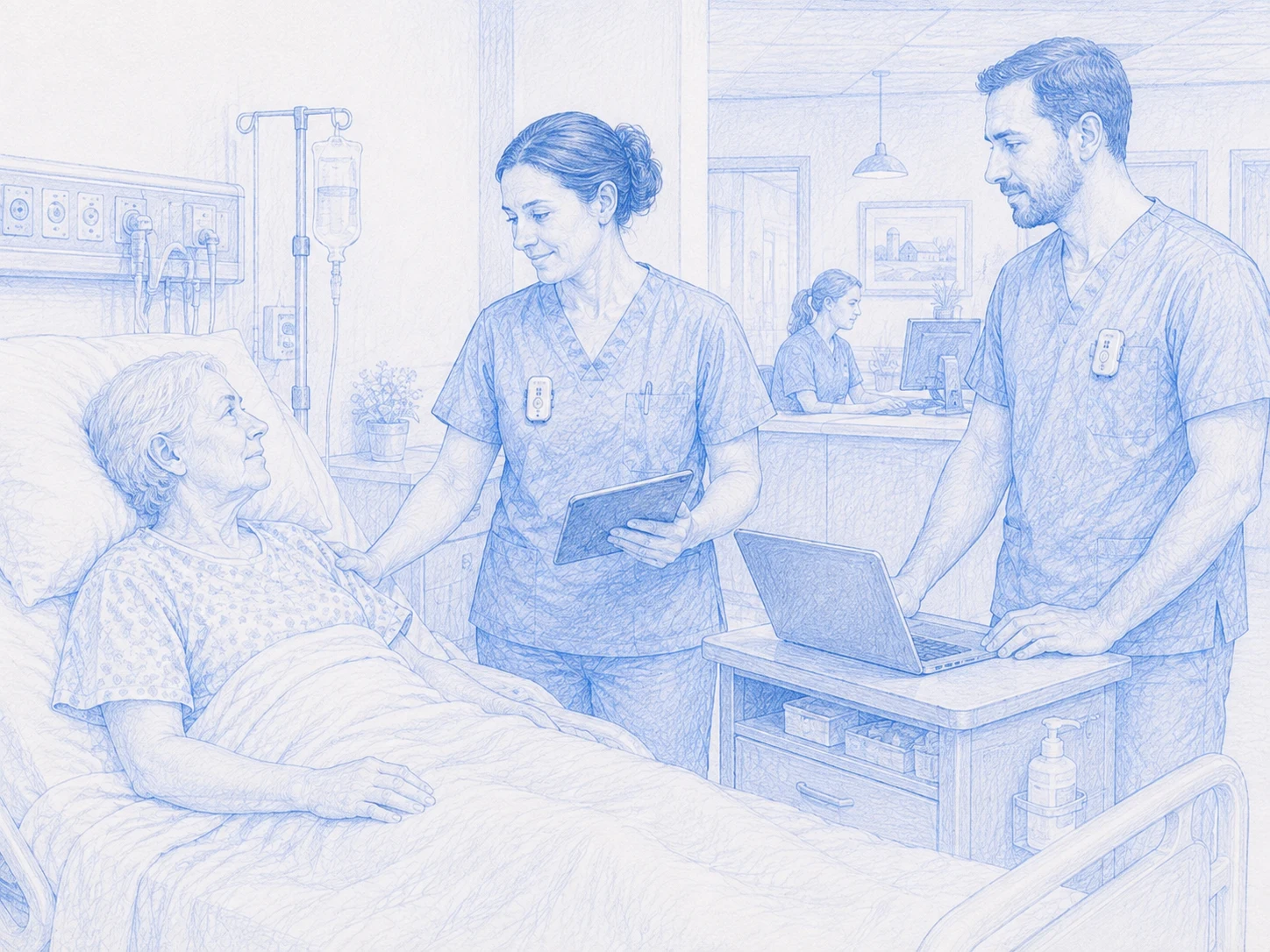
Community, rural, and critical-access hospitals need technology that fits the resources they actually have. Cortex Clip is being designed for practical IT environments, strong privacy requirements, and settings where connectivity may be limited.
Healthcare is the first application of a broader edge-intelligence platform.
AssetCoherence is built around a broader idea: useful AI should operate closer to where physical work happens, even on constrained devices. Cortex Clip is the first application of that approach.
INTELLIGENCE
Healthcare wearables
Privacy-sensitive, mobile workflows where local intelligence can support the user.
Industrial systems
Constrained devices that need intelligence closer to the process.
Agricultural sensing
Local intelligence for environments where infrastructure and connectivity may be limited.
Ambient + robotic devices
Small systems that turn physical-world signals into useful local context.
Dallas Johnson
Building intelligence closer to where the work happens.
AssetCoherence began with a simple idea: useful AI should not require high-cost hardware or a continuous cloud connection. Cortex Clip brings that idea into clinical documentation, where mobility, privacy, constrained hardware, and human review all matter.
Bring Cortex Clip into a real clinical workflow.
We are looking for healthcare organizations interested in testing Cortex Clip in a real clinical workflow. A pilot can help evaluate usability, documentation impact, and privacy requirements. It can also show what responsible deployment would require.